
Every problem in business is a systems problem.
Five bottlenecks. One cause.
Every owner-dependent business is stuck behind at least one of these. They feel like five separate problems. They are five symptoms of the same one.
Trusted by 100,000+ businesses worldwide
Which of these sounds like your week?
Most owners recognise all five. Only one of them is load bearing.
1
“Everything runs through me”
Decisions
The question you keep asking
Why do I have good people and still feel like nothing moves without me?
What it actually is
A decision dependency. Your team is not incapable. They just have no agreed way to make the call without you, so every judgment gets escalated. You hired people and kept the decisions.
What it costs
You cannot get off the tools, because the tools are you.
Start here: Score your owner dependency →
2
“It’s all in their heads”
Knowledge
The question you keep asking
What happens to us if the wrong person walks out the door?
What it actually is
A knowledge dependency. The business runs fine right up until the moment it does not, because the operating manual is stored inside three people and none of it is written down.
What it costs
Every resignation becomes a crisis, and every good person becomes a negotiation.
Start here: Map your Critical Client Flow →
3
“Same job, different result”
Quality
The question you keep asking
Why does the quality depend on who happened to pick up the job?
What it actually is
A quality dependency. There is a right way to do the work. It lives in your best person’s habits rather than in a process, so it cannot be handed to anyone else intact.
What it costs
You cannot promise a client an outcome. You can only promise them your A team.
Start here: Benchmark your systems →
4
“We tried this before and it didn’t stick”
Adoption
The question you keep asking
We have a folder full of procedures nobody opens. Why would this time be any different?
What it actually is
An adoption dependency, and it is the one almost nobody names. The documentation was not wrong. It was written by the wrong person, at the wrong level of detail, at the wrong moment. Owners write what the work should look like. Teams need what it actually is.
What it costs
The next attempt gets harder, because the team has now learned that systems are a thing that gets announced and then quietly dropped.
Start here: Find your Systems Champion →
5
“We’ve hit a ceiling”
Value
The question you keep asking
Why does every push for growth cost me more of my life than the last one?
What it actually is
A value dependency. The business cannot grow past the capacity of the person holding it together, and it cannot be sold for what it is worth while that person is you. A buyer is not buying your revenue. They are buying whether it keeps running after you leave.
What it costs
An owner-dependent business trades at a discount, if it sells at all.
Start here: Value your business →
The diagnosis
They are not five problems. They are one.
Look at what each of those dependencies has in common. Decisions. Knowledge. Quality. Adoption. Value.
In every case, the thing that runs your business lives inside a person instead of inside a system. That is the whole diagnosis. It is unglamorous, and it is exactly why the usual fixes bounce off.
Why the usual fixes do not hold
Each of these is a reasonable thing to try. None of them removes the dependency.
Hire someone senior
You have not removed the dependency. You have moved it to a more expensive person, and now there are two people who cannot leave.
Buy a tool
Software is a filing cabinet. A very good filing cabinet does not know how you do the work, and it will not find out on its own.
Run a strategy framework
Vision, meeting rhythm and accountability charts are genuinely useful, and none of them document how the work actually gets done. You leave the offsite aligned on where you are going, then Monday looks identical.
Push harder
This is the one that works, briefly. Which is precisely what makes it the most dangerous of the four.
Capture what already works, before you improve it
Three things make the difference, and none of them are what owners reach for first.
1
The owner does not write the systems
Someone else does. We call them the Systems Champion. The person who does the work describes it, and a second person captures it. Owners are the worst possible authors of their own processes, because they know too much to explain it.
2
Capture first, optimise later
Do not redesign the process. Record it exactly as it is currently done by whoever does it best. Improvement is a second pass, and it gets far easier once something actually exists on paper.
3
Start narrow
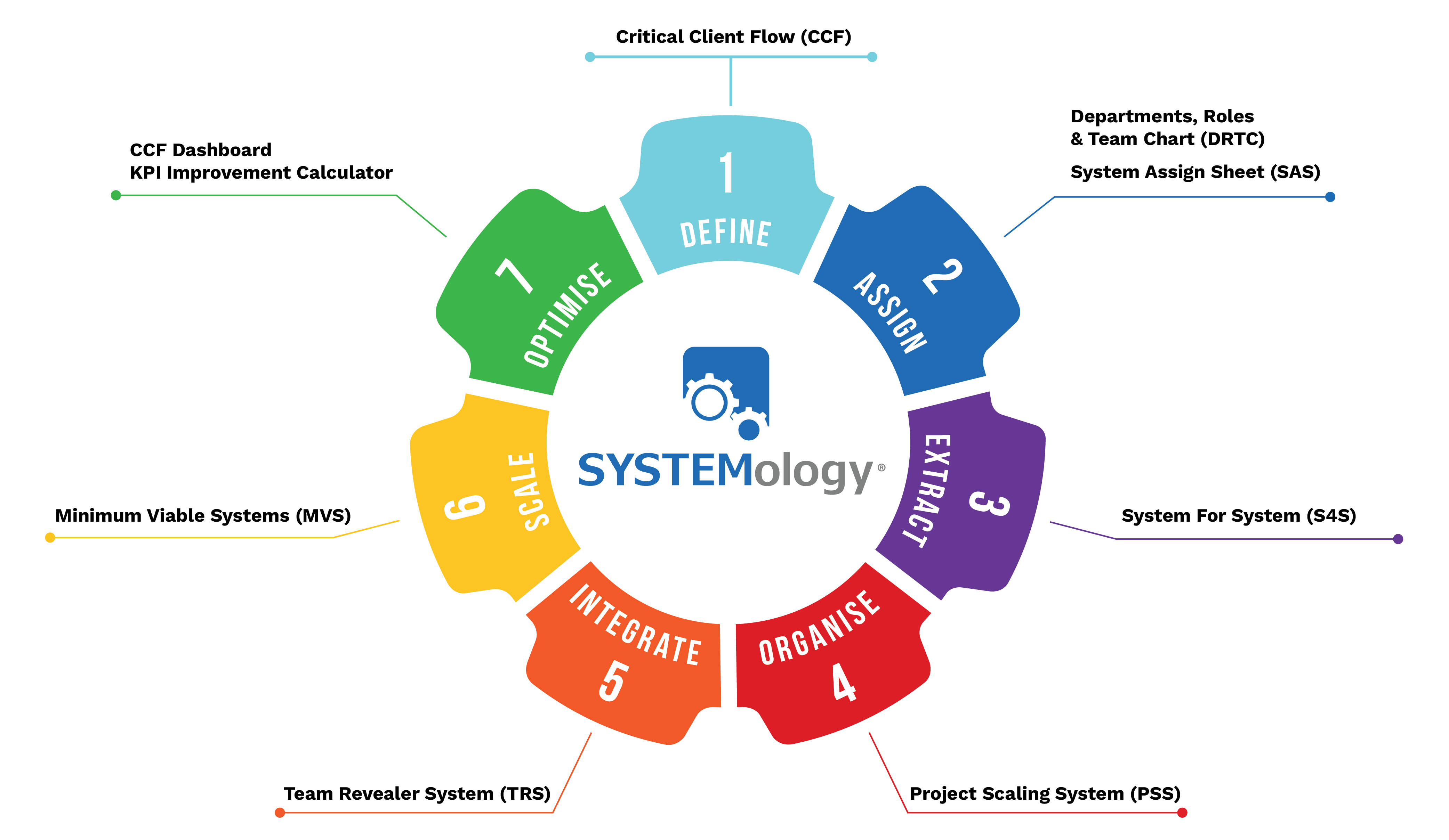
Not the whole business. Start with the Critical Client Flow: the line of steps running from a lead arriving to a client being served and paying you. Systemise that first, because that is the part that makes the money.
So which one is actually yours?
Most owners feel all five, and only one is load bearing. Fix the load-bearing one and three of the others quietly go away. Pick the line that stings most.
Everything runs through me
Owner Dependency Score
Take the assessment →
It’s all in their heads
Critical Client Flow
Map your flow →
Same job, different result
Business Systems Benchmark
Benchmark your systems →
We tried and it didn’t stick
Find a Systems Champion
See who to look for →
We’ve hit a ceiling
Business Valuation Calculator
Value your business →
Not sure yet
All free tools and templates
Browse the lot →
Owners who cleared theirs
Three different bottlenecks, three different industries, same underlying fix.
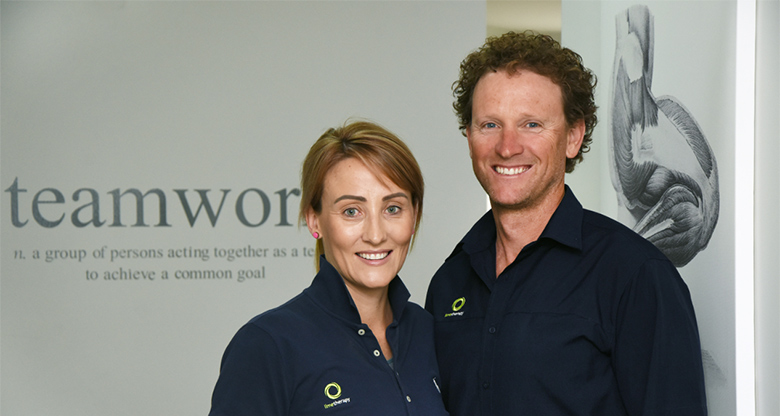
Bottleneck 4 · Adoption
“The missing piece for us was the how. We had policies. We didn’t have a way to make people actually use them.”
Renee and Matt Kelly, Lime Therapy · 40-person allied health clinic
Found their Systems Champion inside the team, a junior rather than a manager. Owners stepped back from daily operations.

Bottleneck 2 · Knowledge
“My business was so specialised I thought it couldn’t be systemized. That was the problem, not the truth.”
Shannon Smit, SMART Business Solutions · international tax and transfer pricing
Roughly 1,000 hours saved by layering AI on top of documented systems. Stepped back from daily operations.

Bottleneck 3 · Quality
“Peer-reviewable methodology IS the product. systemHUB is where ours lives.”
Gary McMahon, Ecosystem Solutions · environmental and ecology consulting
Standardised assessment and reporting. New consultants onboard against a documented methodology.
Fair questions
The one costing you the most right now, not the one that looks easiest. If you genuinely cannot tell, start with the Owner Dependency Score. It is the fastest read on whether the problem is decisions or something further down the chain.
No, and the two work well together. EOS sorts out vision, meeting rhythm and accountability, which is the leadership layer. None of that documents how the work gets done. Plenty of our clients run both. If you want the honest side-by-side, we wrote one.
Because of who writes it and when. Most attempts fail because the owner writes an idealised version of the process from memory, in one heroic weekend, and the team quietly ignores it. Capture-first flips that: the person doing the work is recorded doing it, and someone other than the owner turns that into the system.
Not to start. The method works on a shared drive. Software matters once you have enough systems that finding and maintaining them becomes the new problem, which usually happens sooner than owners expect. That is what systemHUB is for, and it is a later decision, not a first one.
Mapping your Critical Client Flow takes an afternoon and usually changes how you see the business immediately. Documenting the critical systems behind it is a matter of weeks, not years, precisely because you are capturing what already happens rather than inventing something new.
You do not have to fix all five
Pick the one that is costing you the most right now, and start there. We will help you work out which one that is.