Every business has them. The prospect who asked for a quote and then never picked up the phone. The one who had a great first conversation and then went quiet. Your sales team tries two or three times, marks them as dead and moves on to the next lead in the pipe.
No business converts every prospect. But plenty of owners make it worse by letting their dead leads die on the vine, while spending more and more chasing new ones.
In this Business Systems Summit session, David Jenyns sits down with Pete Williams, a Melbourne entrepreneur, author and marketer who is also one of Dave's long-time friends. Forbes said Pete is one entrepreneur every marketer should be modelling. His telco company won a Small Business Icon Award for best-in-class marketing strategies. A big part of that win was a system he calls resuscitation marketing. Pete walks through his five steps to bring dead leads back to life, automatically.
Key Takeaways
- A dead lead isn't one thing. Leads die for different reasons, so each reason needs its own follow-up.
- Map your sales funnel, find the death traps where prospects drop out, then sort them by cause of death.
- Give each cause of death its own automated sequence of emails, calls, SMS and offers.
- Make salespeople pick a cause of death in the CRM so the right sequence starts on its own.
- Tag every lead that comes back as resurrected, measure each campaign and review the five steps once a year.
Why Most Businesses Write Their Leads Off Too Early
Think about how a typical sales funnel works. Suspects visit your website or walk into your store. Some of them become prospects. Some of those buy. The rest drop out somewhere along the way.
Pete's observation, from his own business and from talking to other owners, is that most teams simply let those prospects go. If someone doesn't convert in the first pass, they get forgotten. The focus swings straight back to the top of the funnel: "Give me the new leads. I need the good leads."
So leads run through the pipe and nobody thinks about what happens at the other end. Everyone is too busy filling it up.
That's a costly habit. You've already spent time, money and energy getting each of those people interested. Walking away after two or three phone calls throws most of that investment out.
What Is Resuscitation Marketing?
Resuscitation marketing is Pete's name for a system that takes leads your team has written off and brings them back into your sales funnel. You put it in place once and it does the resuscitating for you, at the right time, mostly on autopilot.
Pete built his version inside Infusionsoft for his telco company. The result: every day, emails and tasks land back in the system from leads the sales team had ignored or closed off as dead weeks or months earlier. As Pete puts it, they don't have to worry about filling the funnel all the time, because the bucket keeps topping itself up.
The process has five steps. To make them concrete, Pete applies them live to Dave's video production company, Melbourne Video Productions, which hires out studio time, produces videos and edits them. The same thinking works whether you sell video, telco equipment or anything in between.
How to Bring Dead Leads Back to Life in 5 Steps
Step 1: Map Out Your Sales Funnel
Start by getting clear on how you actually sell. What is the path a prospect follows? At what point do people disappear?
In Dave's business, most traffic went to a sales page with one big call to action: a quote calculator. To get the quote, a visitor had to hand over their name, phone number and contact details. That qualified them as a real prospect. They then got an autoresponder message ("we've got it, one of the team will be in touch shortly") and an offer of some useful information to help them decide about video. A salesperson aimed to call within 24 hours to clarify the job, prepare the quote, send it and follow up.
Many businesses run more than one funnel. Some of Dave's prospects skipped the calculator and just picked up the phone. Pick one funnel and work through it first. If you've never laid out how a client moves through your business from first contact to final delivery, mapping your Critical Client Flow is a good place to start.
Step 2: Identify the Death Traps
A death trap is any point where prospects fall out of the funnel. In the video production example, Pete spotted several:
- No response after the quote request. The prospect asked for a quote and then ignored every call and email. Strange, given they took the time to ask, but it happens far more often than most owners assume.
- Silence after the quote is sent. The quote goes out, the salesperson follows up a couple of times and hears nothing.
- A great first call, then nothing. The prospect had a good conversation with the salesperson and then disappeared.
- A half-finished quote. The prospect started the quote calculator and never completed it.
Sales teams tend to behave the same way at these points. Reach out two or three times, then either hope the lead comes back on their own or forget about them.
Step 3: Categorise the Causes of Death
Once you know where leads are dying, work out why. Pete's list for Dave's business:
- Too expensive. The price didn't fit.
- Missing in action. You spoke with them, then they vanished and you don't know why.
- Never reachable. They requested a quote, but you never got hold of them at all.
- Doing it themselves. They still want video, they've just decided to shoot it on their own.
- Lost to a competitor. They shopped around and went elsewhere.
- Not qualified. The enquiry was never a real fit for what you sell.
Your business will have its own variations. Pete suggested another for Dave: the prospect who decides video simply isn't for their business. Whatever your list looks like, these are the reasons your sales team marks a lead as dead.
Can you see where your leads go missing?
Lay out every step from first enquiry to happy client with the free Critical Client Flow template, then spot the death traps in your funnel.
Step 4: Perform CPR on Each Category
In Pete's system, CPR stands for categories for prospect re-engagement. (A play on words with resuscitation marketing that Pete clearly enjoys.) The idea is to set up a separate category for each cause of death, then automate a different set of marketing for each one.
The categories for Dave's business might look like this: dead, never reachable. Dead, missing in action. Dead, wrong timing (they still want video, just not for another three or six months). Dead, not qualified. Dead, lost to competitor. And dead, abandoned cart, for the prospect who stopped halfway through the quote, which works just like an abandoned cart sequence in an online store.
"Most businesses go, 'Oh, a dead lead's a dead lead.' But if you think about it, it's actually not. They're very, very different."
Pete Williams
The message for someone you never reached should look nothing like the message for someone who chatted happily with your salesperson and then vanished. And both should differ from the message for someone who said, "I'm going to do it myself."
Take that do-it-yourself prospect. They've got an iPhone and a lapel mic and they're going to record their own videos. Fine. Instead of writing them off, a sequence could open with a friendly email: thanks for the chat, doing it yourself is a great idea and here's a $300 video production course that will help you get started (rather than the $5,000 quote you discussed). Once they see the value of video and want better quality, they know where to come back. Later emails could share tips for shooting on an iPhone, or point to someone else's course as an affiliate offer. Either way, you earn revenue from a lead that would otherwise have been forgotten.
Missing in action is where Pete's telco gets its most interesting responses. When a prospect goes quiet after talking with their salesperson, one email in the sequence comes from Pete as one of the sales managers. It literally asks, "Did Scott offend you?" It goes on to say that the prospect had a great conversation with Scott about their phone system and then went silent. Did he say something to offend them? Did he not listen to their actual problem? It doesn't happen often, so Pete wanted to check in and see whether there's anything he can do.
Who isn't going to reply to that? The likely reply is some version of, "No, he didn't offend me. I've just been busy." And it's all automated. The moment the salesperson marks the lead as dead, missing in action, the sequence begins.

Step 5: Automate the Hand-Off From Your CRM
The final step is implementation and it hinges on one change. Instead of one "dead" status in your CRM, create five or six, one for each cause of death. Your salespeople then have to choose why a lead died when they close it off.
That choice triggers the matching sequence in your marketing automation tool, whether that's Infusionsoft, ActiveCampaign or something else. If your CRM and email tools are separate, a Zapier integration can push the lead across automatically, so nobody has to remember to do it by hand.
Here's how a missing in action sequence might run:
- 24 hours after the lead is closed: a short note saying you're about to close their file.
- Five days later: something lighter. "We haven't heard from you in a couple of days. Were you eaten by a T-Rex? Did the dog eat your proposal?"
- Five days after that: "We understand, it's cool. Here are three things to consider." One of those could be adjusting the quote.
- Around day 45: a Hail Mary. An email that reads like a broadcast to all recent prospects, announcing a 15% discount this week. It goes out automatically at the same point in every sequence, timed for when you know these leads tend to drift away.
The lost to competitor category is one most businesses bury as deep as they can. Pete sees it differently. For Dave's business, an automated email 45 days after the lead closed could read: "Just stumbled across your business card and wanted to see how you got on with that other company." It could then mention editing services. If the other company's video didn't turn out quite right and the client has the raw footage, Dave's editing team might be able to save it for a low cost. Or it could offer to promote the finished video and turn it into content marketing. You might pick up extra work from a lead you thought was gone for good.
Dave already did something similar with his CRM, Nutshell. Just before closing out a lead, his team sent an email to say so: "You're in our system. We don't want to keep hounding you if you're not interested. Just wanted to double-check before I close you out." Another tactic was a pattern interrupt: one team member emails the prospect with Dave in CC, asking, "Have you heard back from Jane?" Seeing a conversation happening about them, the prospect feels they need to join in.
Pete's improvement on Dave's version: build those emails as automations and let the CRM status trigger them, rather than relying on the team to send them manually. If your problem is earlier in the process, getting a first meeting at all, the guide on how to book a sales meeting covers the follow-up touches that come before a lead goes cold.

Re-Engagement Tactics That Go Beyond Email
Most of the examples so far are emails, but Pete's sequences use plenty of other actions. Mix and match depending on the tools and systems you already have:
- Phone calls triggered by behaviour. In Infusionsoft and similar tools, an unsubscribe from your proposal sequence can create a task for someone to call that person and ask why they opted out.
- Affiliate offers and down-sells. If your core product is too expensive, an email around day 13 can point to a partner's product that might be a better fit.
- Hail Mary discounts. A last pitch, timed for when leads in that category usually disappear.
- SMS. Text messages dropped into the sequence alongside the emails.
- One-click choice emails. Give the dead lead three links: "I'm interested, I've just been busy, give me a week." "I've bought from someone else." "I don't want to go ahead any more." No phone call, no reply needed.
That last one is a favourite. If someone clicks "give me a week", the system automatically books a task in the salesperson's calendar to call them seven days later. People can tell you where they stand without feeling like they have to talk to you.
None of this relies on a salesperson remembering to follow up. The rules live in the system, not in someone's head.
Get your follow-up rules out of your sales team's heads
Document your sales process, cause-of-death categories and re-engagement sequences in systemHUB, so every salesperson follows the same playbook.
How to Measure Which Dead Lead Campaigns Are Working
Any CRM worth its salt lets you tag and categorise contacts. That's all you need to track results.
In Pete's system, the moment a salesperson marks a lead with a cause of death, the lead is tagged with it. If the lead later clicks "I'm still interested, speak to me again in seven days", two things happen. The salesperson gets a call task and the lead moves back to prospect with a new tag: resurrected.
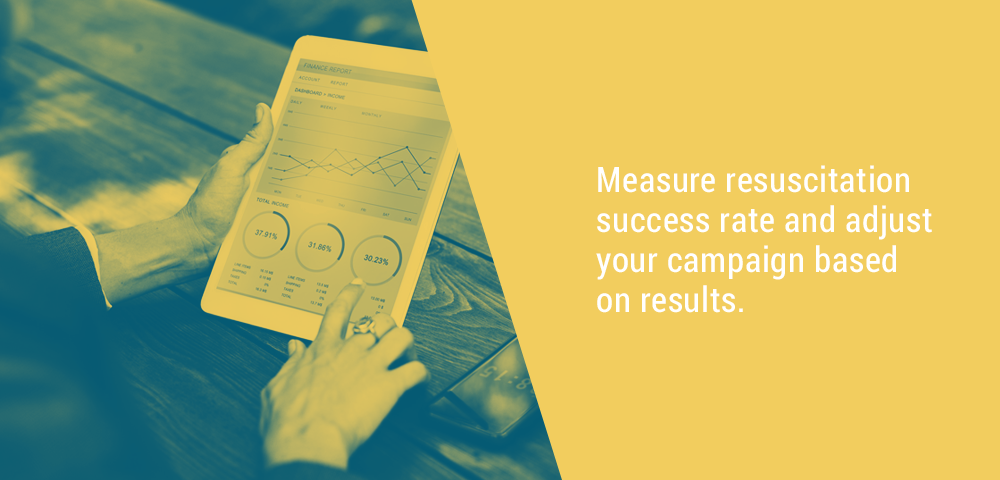
That makes reporting simple. Pull the last 30 days and compare how many leads were tagged with each cause of death against how many were resurrected. A report might show 15 leads tagged dead, missing in action, with three resurrected. Another 20 might have disappeared without a word, with two resurrected. For the lost to competitor group, you might track how many clicked the affiliate offer instead.
Email replies are the other measure, because so much of this runs on email. Things like the "Did Scott offend you?" message get real replies. So make sure there's a system for what the sales team does when one lands: tag the person, fill in an internal form or change their status in the CRM, so every resurrected lead gets counted.
The numbers tell you where to look next. If your missing in action campaign resuscitates a reasonable share of leads but your lost to competitor campaign doesn't, that's your cue to run the five steps again for that category. Map the funnel, find the death traps, categorise the causes of death, perform CPR and implement.
Pete's advice is to go through the five steps once properly, then revisit them about once a year to check the pulse and update what isn't working. In between, your marketing automation does the heavy lifting.
Squeeze Every Last Drop From the Leads You've Paid For
Most businesses have their lead generation sorted. They work hard to turn suspects into prospects, whether that's a free report, a quote request or a proposal. They do everything they can to get people hot for the offer. Then, if the prospect doesn't take that first core action, the focus goes straight back to chasing new enquiries.
As Dave puts it, you spend all the money acquiring the lead, so you might as well automate the follow-up. And because the leads you already hold are where this starts, it pairs well with getting more out of the rest of your list too. The post on monetising your existing database picks up that thread. Pete shares more of his thinking at Preneur Marketing, where you can also download the audio version of his first book.
The big idea in Pete's process is segmenting the dead, something few businesses ever think about. Sort your lost leads by why they left, give each group a sequence that speaks to that reason and let the system keep working while your team chases new business. Dave's takeaway is that you only really need to build it once. You don't have a dead lead problem. You have a follow-up system you haven't built yet.
Frequently Asked Questions
What is a dead lead?
A dead lead is a prospect your sales team has stopped chasing. Usually they asked for a quote or had a conversation, then stopped responding after two or three follow-ups. Pete Williams argues they aren't all the same: some were never reachable, some went missing after a good call, some went to a competitor and some decided to do it themselves. Each needs a different message.
How do you revive dead leads?
Follow five steps. Map your sales funnel, identify the death traps where prospects drop out and categorise the causes of death. Then build a separate automated sequence for each category and set up your CRM so marking a lead with a cause of death starts the right sequence. Track resurrected leads with tags to see which campaigns work.
What should you send a lead who goes quiet after a sales call?
Try something they'll want to answer. Pete's telco sends an email from one of the sales managers asking, "Did Scott offend you?" Other options: a light-hearted "Were you eaten by a T-Rex?", a note that you're about to close their file, or an email with three one-click links (interested but busy, bought elsewhere, not going ahead) so they can reply without a phone call.
How often should you review a lead reactivation system?
Pete suggests building it properly once, then reviewing it about once a year. Check how many leads each cause-of-death campaign resurrects. If one category lags behind the others, run the five steps again for that category and adjust the sequence.
Want your sales systems built for you?
Our team helps you document the core systems in your business in 90 days, from first enquiry to follow-up, so leads stop slipping through the cracks.
Recent posts

15 Construction Business Processes to Document First (From Lead to Closeout)
The 15 construction business processes to document first, from lead qualification and estimating to...

What Systems Does a Business Need (and Which Ones Matter Most)?
Discover which business systems matter most, how many you need, and why capturing processes before...
How to Build a Systems-Driven Business – It Starts in Your Head
The biggest barrier to a systems-driven business is your own thinking. Here’s how to shift your...